Daily metals
by
This Morning
LME base metals are trading marginally firmer in early Wednesday trade after Tuesday's broad selloff. Copper is at $13,326, up 0.2% from Tuesday's official close of $13,302.84. Aluminium trades at $3,233.50, up 0.1% from its close of $3,229.04, still hovering near three-month lows. Zinc at $3,496.50 (+0.1%) and lead at $1,910 (+0.5%) show modest recoveries. Nickel is essentially flat at $16,990 (+0.04%). Tin is the standout mover, trading at $51,300 — up 1.1% from its close of $50,764 — after Shanghai tin futures plunged over 5% overnight.
Macro & Geopolitics
Markets remain rattled after Tuesday's global tech-led selloff, which saw the Nasdaq drop 2.2% and South Korea's KOSPI plunge 10% in its sharpest one-day fall since March. European futures point lower this morning, with Euro Stoxx 50 and DAX futures each down 0.3% and FTSE futures off 0.67%. The U.S. dollar has climbed to a 13-month high (DXY 101.46), pressuring all dollar-denominated commodities. Traders are now pricing in three Fed rate hikes in 2026 — up from one before last week's meeting — as new Chair Kevin Warsh signals a hawkish stance on inflation. Oil prices are near four-month lows as tanker traffic through the Strait of Hormuz resumes following the U.S.-Iran peace deal, though conflicting accounts from Washington and Tehran over nuclear inspections and frozen funds cloud the outlook. Germany's Ifo business climate survey for June is due at 08:00 GMT and will be closely watched for signs of recovery. Europe's severe heatwave, with temperatures exceeding 40°C across France, Spain and Germany, is forcing construction firms to shift working hours and could dampen near-term physical demand.
Base Metals
Aluminium remains the most directly affected by the Middle East de-escalation. The U.S. 60-day sanctions waiver on Iran has raised expectations that Gulf smelter output — normally 9% of global primary aluminium capacity — could gradually resume after three months of war-related disruption. The LME cash-to-three-month spread has flipped to a slight contango of -$3.46/t, signalling easing tightness in nearby supply. Copper found a floor after hitting a five-week low on Tuesday, supported by structural demand from AI infrastructure, grid investment and EVs. Tin suffered the heaviest losses on Tuesday (-5.6% on LME) and Shanghai futures fell another 5% overnight. Zinc and lead also touched mid-April lows before stabilising. The strong dollar and hawkish Fed expectations remain the dominant headwinds across the complex.
Precious Metals
Gold extended its decline to a near two-week low of $4,064/oz, down 1.1% in Asian trade, as the surging dollar and rising rate-hike expectations erode the appeal of non-yielding assets. Bullion has now fallen roughly 23% since the onset of the U.S.-Israeli war on Iran in late February. Traders are watching Thursday's U.S. PCE inflation data for further direction. Silver dropped to $61/oz, platinum fell to $1,632 and palladium slipped to $1,225. Analysts warn that a break below $4,000 in gold could open the door to a test of $3,800.
Steel
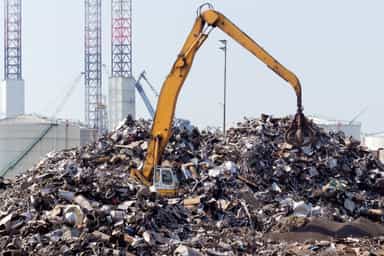
European steel markets are in a holding pattern ahead of the 1 July activation of the EU's new steel safeguard regime, which slashes tariff-free import quotas by 47% to 18.3 million tonnes and doubles the out-of-quota duty to 50%. HRC prices in Northern Europe edged lower last week to around €675/t ex-works, with buyers reporting near-zero activity. The ongoing heatwave is compounding the demand lull, with German construction firms shifting to early-morning schedules and Thyssenkrupp providing extra cooling measures at its blast furnaces. Global scrap prices have been falling through June, reflecting weak mill margins and subdued seasonal demand.
Rare Earth Metals
China's detention of a Japanese electronics worker in Dalian over suspected illegal export of rare-earth-processed products underscores the tightening grip Beijing maintains on critical mineral flows. Separately, Aclara Resources received final environmental approval for its Penco rare-earths project in Chile, a key step toward building a Western supply chain for permanent magnet materials. The DRC continues to reshape the cobalt market through export quotas, with Chinese imports of Congolese cobalt collapsing to just 5,000 tonnes in January–April versus nearly 200,000 tonnes a year earlier, while Kinshasa pivots toward U.S. investment partnerships.
Forex
The euro weakened to $1.1364, its lowest in a year, as investors scaled back expectations for further ECB tightening and the dollar rally extended on hawkish Fed repricing. Sterling eased to $1.3192 amid political uncertainty following PM Starmer's resignation announcement. The yen remains pinned near 40-year lows at 161.53, with markets on alert for possible joint U.S.-Japan intervention after Finance Minister Katayama's discussions with Treasury Secretary Bessent. For European scrap traders, the weaker euro against the dollar makes imported material more expensive and could support domestic scrap premiums.
Watch Today
Germany's June Ifo business climate index (08:00 GMT) is the key European data point and will provide insight into the eurozone's largest economy. Micron Technology reports earnings after the U.S. close, which could set the tone for the semiconductor sector and broader risk appetite. U.S. new home sales data (14:00 GMT) and a $70 billion 5-year Treasury auction will also draw attention.
Share