Metals Daily
von
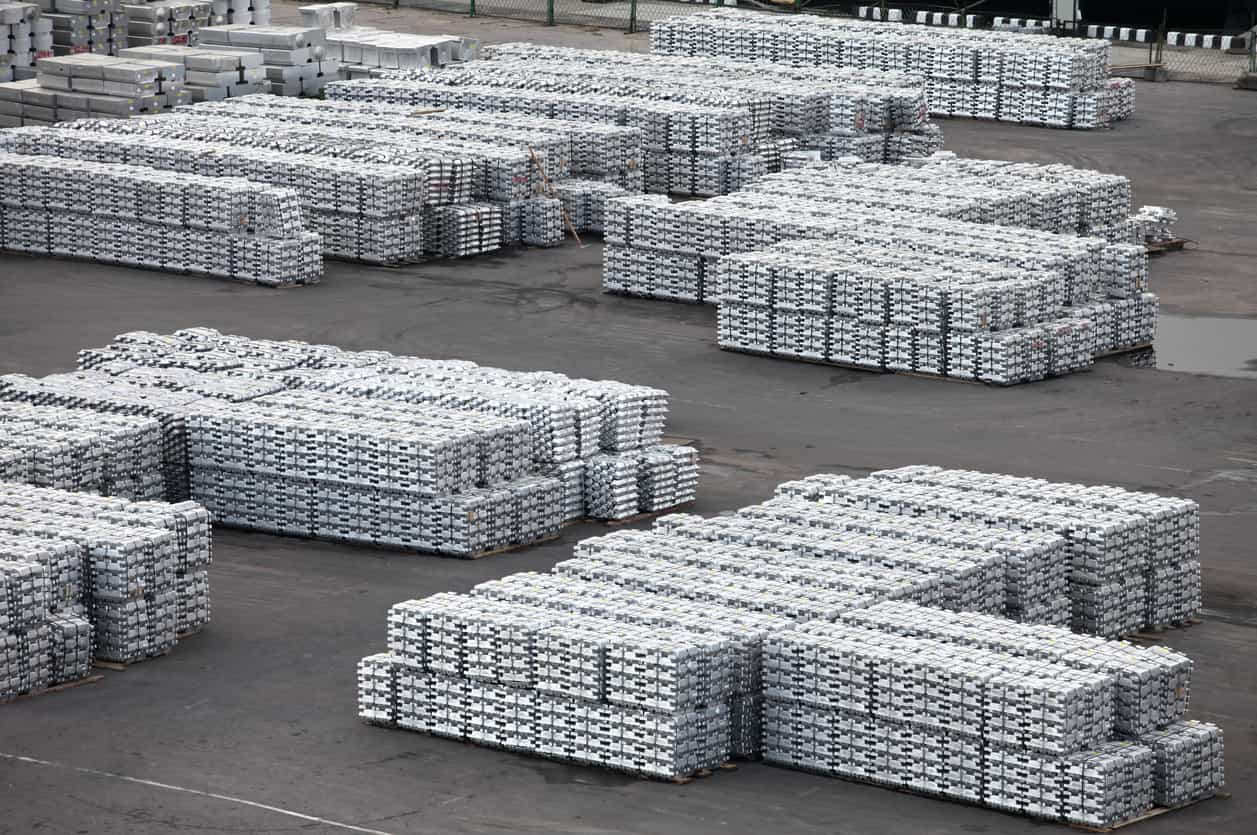
This Morning Base metals opened en bloc into Friday's Asian session, extending the recovery seen after Thursday's soft U.S. payrolls print. Against Thursday's official closes, copper firmed to 13,201.5 (down 0.6% versus the 13,287.6 settle as the trade quote catches up), while tin was the standout, jumping to 51,195 — up 1.3% from 50,552. Nickel edged up marginally to 16,060, and aluminium slipped 0.7% to 3,061.5 from 3,082.07. Zinc eased 0.4% to 3,474 and lead softened 0.5% to 1,828. The broad tone is constructive as a weaker dollar underpins the complex, though thin liquidity is likely given the U.S. Independence Day holiday. Macro & Geopolitics The defining event was Thursday's U.S. non-farm payrolls, which added just 57,000 jobs versus the 110,000 expected, with prior months revised lower. Unemployment slipped to 4.2% as the participation rate fell to a five-year low. Markets swiftly repriced Fed expectations: the odds of a September hike dropped to around 54% from 66%, and a hold until October is now seen as more likely. The dollar posted its sharpest fall in two months, a clear tailwind for metals. In Europe, focus turns to final June services PMIs across the euro zone, Germany, France and the UK. U.S. markets are closed Friday for Independence Day, thinning liquidity. Iran-U.S. talks remain stalled, with the next round delayed until after Ayatollah Khamenei's funeral rites, scheduled for July 4–9. Base Metals A softer dollar and receding near-term Fed hike bets lifted the complex, offsetting a week of bearish supply news. Aluminium rebounded from a four-month low near $3,040 hit midweek, though it remains down roughly 20% over the month as the Gulf war premium unwinds — EGA is restoring Al Taweelah output faster than expected and Hydro plans a Q4 Slovak restart. Citi pushed back, arguing fears of a rapid Middle East supply return look overstated. Copper drew support from a seventh straight month of Chinese factory expansion and a Yangshan premium near multi-year highs, though the market still awaits a White House decision on refined-copper tariffs. Tin outperformed on its structural deficit narrative, while zinc, lead and nickel posted modest gains. LME stocks remain a key theme: aluminium inventory has shrunk near 400,000 tons. Precious Metals Gold extended its rebound, rising over 1% toward $4,180 an ounce and heading for its first weekly gain in five — up roughly 2.3% — after the weak payrolls print eased rate-hike fears and pressured the dollar. The metal touched its highest since June 23. Central banks remained net buyers in May, adding 41 tons, per the World Gold Council. Silver climbed above $62, platinum gained toward $1,660 and palladium firmed near $1,284, all at over one-week highs and set for weekly advances. Analysts caution that with year-end hike risk not fully erased, further downside toward $3,500 remains possible if data firms. Steel European steel signals centred on regulatory pressure. Tata Steel's chairman flagged that operating conditions in the Netherlands have grown challenging, with certain environmental rules exceeding EU standards, and said viable solutions for some legacy assets aren't feasible within accepted regulatory timelines — a reminder of the compliance burden weighing on regional producers. Separately, Goldman Sachs argued the EU is likely to pursue targeted trade measures rather than U.S.-style blanket tariffs, with steel among the sectors most exposed to Chinese trade diversion and thus a probable early focus for action. In ratings, Fitch revised Gerdau's outlook to positive, affirming its 'BBB' long-term rating. Rare Earth Metals Critical-minerals diplomacy advanced as India and Japan signed a pact covering geology and mineral exploration, including critical minerals, alongside a separate metals and energy-security agreement — a further sign of allied efforts to build supply chains outside China. Meanwhile, Brazil unveiled its National Mining Plan 2050, targeting a rise in its share of global critical-minerals output to 12.2% from 8.3%. Despite holding the world's second-largest rare earth reserves, Brazil still accounts for under 1% of global output, underscoring the long lead times facing Western and allied efforts to diversify away from Chinese dominance in magnet feedstocks. Forex The euro was among the chief beneficiaries of the dollar's post-payrolls slide, climbing around 0.5% to roughly $1.143 on Thursday as the greenback logged its steepest one-day drop in two months. The dollar index fell to near 100.8 and was set for a weekly loss. For European traders, the softer dollar cheapens greenback-priced metals and supports import margins. The yen stabilised around 161 per dollar after a sudden, possibly intervention-driven jump on Thursday; Tokyo is reportedly favouring a less-telegraphed, opportunistic approach. Sterling also firmed. Final euro-zone services PMIs today are the near-term domestic focus. Watch Today Final June services and composite PMIs are due across France (0750 GMT), Germany (0755 GMT), the euro zone (0800 GMT) and the UK (0830 GMT). France also reports May industrial output. U.S. markets are closed for Independence Day, so expect thin trading volumes and muted follow-through across the complex.
Teilen