Deal or no deal
door
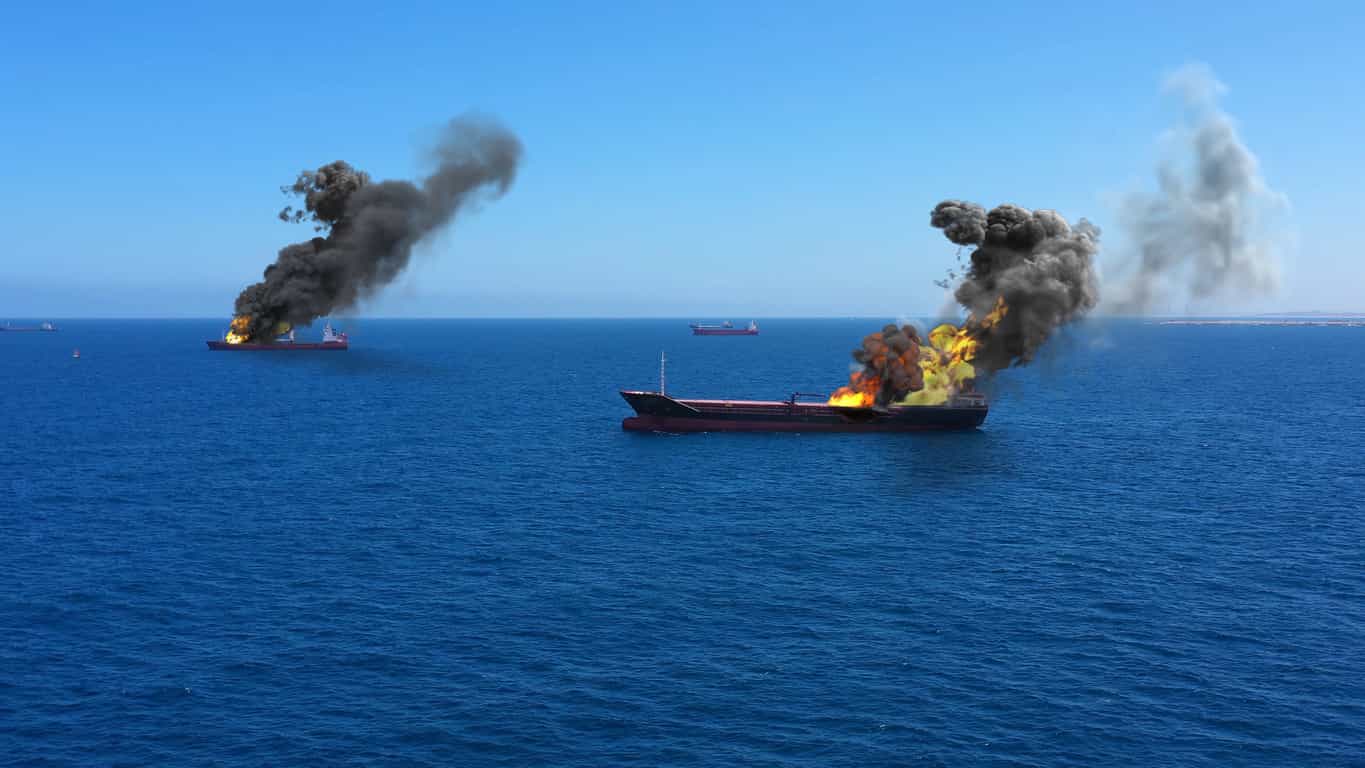
The holiday-shortened week began – and is ending – on a hopeful note amid apparent signs of progress toward a U.S.-Iran ceasefire extension. The situation remains tenuous, however, as many purported "breakthroughs" in this three-month-old conflict have come to naught. But markets are cautiously optimistic. Before the bell on Friday, crude prices were down and global equities – buoyed by the AI buildout and memory chip boom – continued to hit record highs. Oil prices have gyrated with the Iran headlines throughout the week. Brent crude tumbled below $100 per barrel early in the week, as reports emerged of a potential U.S.-Iran peace deal involving a 60-day ceasefire extension and an eventual reopening of the Strait of Hormuz. Prices then crept higher as President Donald Trump claimed he was "not satisfied" with the proposed deal and both sides traded blows, only to slump again on Thursday following news that an agreement on the outline of the ceasefire extension had reportedly been reached, pending Trump's approval. Crude is on track for a weekly drop of more than 10%, with Brent trading at around $92/bbl early on Friday. As we enter the fourth month of the conflict, it’s clear that the near-total closure of Hormuz has rewired global oil, fuel and LNG flows. For more on that front, take a look at these six key charts tracking how the crisis has reshaped energy and shipping sectors. For equity investors, the news out of the Gulf remained mostly background noise, with chip stocks largely responsible for keeping the party rolling in both the U.S. and Asia. Two more chipmakers, Micron Technology and South Korea's SK Hynix, hit $1 trillion in market value this week, joining Samsung Electronics in this growing club. Samsung also saw its shares surge after its workers approved a pay deal that would avert a massive strike and award some of them supersized bonuses. Somewhat remarkably, the S&P 500 has climbed more than 9% since the start of the war, with Goldman Sachs on Wednesday lifting its target for the index from 7,600 to 8,000 by year-end, citing strong corporate earnings. But if anything can spoil the fun, it will likely be rising borrowing costs. While Treasury yields have fallen modestly this week on hopes for a reopening of Hormuz, they are still up meaningfully since the outbreak of the conflict, with the benchmark 10-year yield up nearly 50 basis points since February 28. In the past few months, yields have mostly risen in tandem with resurgent stocks, but an inflection point could be on the horizon. Some models suggest that if borrowing costs creep upward again, they could soon cross a point where equities will start to suffer. And there are plenty of reasons to believe higher borrowing costs could be in the cards. The Personal Consumption Expenditures (PCE) price index – the Federal Reserve's preferred inflation gauge – jumped 3.8% in April, nearly twice the Fed's target, largely due to the energy price spike. Even if a 60-day deal is reached in the Middle East and the strait is reopened, crude prices are unlikely to fall back to pre-war lows anytime soon given the physical damage in the Gulf and the need to replenish inventories. This could cause a headache for newly appointed Fed Chair Kevin Warsh, who was expected to push for lower interest rates this year. Fed futures are pricing in at least one rate rise over the next year and Fed policymakers are sending increasingly hawkish signals. Governor Lisa Cook said on Wednesday that she was prepared to raise rates if inflation didn't ease, while erstwhile dove Christopher Waller urged the removal of the apparent "easing bias" in the Fed’s latest statement. Even President Trump – who has made no secret of his preference for lower rates – appears to acknowledge that the macro reality has fundamentally changed. He has recently rowed back his calls for immediate rate cuts – at least for now. The president has indicated to Warsh that he should act as he sees fit, telling him at his swearing-in ceremony that he should be "fully independent". If this change in tone persists, it could signal a shift in what many believe to be the administration’s soft dollar policy, as the greenback is unlikely to weaken in a more hawkish environment. Elsewhere, rate hikes are expected in the euro zone and Japan as soon as next month. ECB board member Isabel Schnabel told Reuters on Tuesday that the central bank should raise rates in June even if a U.S.-Iran peace deal is reached, owing to the size and persistence of the current energy shock. In corporate news, BP shocked the energy industry on Tuesday by ousting Chairman Albert Manifold for alleged aggressive conduct less than eight months after he joined. That comes within three years of CEO Bernard Looney's dismissal for improper relations with colleagues. These repeated leadership scandals suggest the British energy giant's board is quickly becoming a liability. For more data-driven insights on markets and commodities, check out Reuters Open Interest. You can learn: * Which unlikely countries are big winners from the Iran war? * Why is corporate America increasingly looking like a safer borrower than the U.S. government? * Why might the growing gap between major inflation gauges be a big problem for Kevin Warsh? * How might Asia's early heatwave impact global coal and gas markets this year? * Why is the AI capex boom unlikely to end in a crash even as it eclipses the dotcom mania? * Why should the copper market pause before second-guessing the Trump administration? I’d love to hear from you, so please reach out to me at . This weekend, we're reading... MIKE DOLAN, ROI Finance & Markets Columnist: If you're worried about a squeeze on the world's main reserve currency or a pullback by the global lender of last resort, look to the Battle of Trafalgar, argues this Bank for International Settlements working paper. Disrupted transatlantic trade routes in 1805-06 cut Europe off from Latin American silver, the high-powered global money of the day, sending the continent into a credit shock. GAVIN MAGUIRE, ROI Global Energy Transition Columnist: Denver has a plan to heat and cool downtown buildings using sewage – gross, yes, but potentially a template for decarbonising other cities, explains this Canary Media piece. ANDY HOME, ROI Metals Columnist: This Reuters article by Clara Denina looks at the surge in U.S. listings by metals companies explicitly targeting the defence sector. JAMIE MCGEEVER, ROI Markets Columnist: Are UK politicians too deferential to "bond vigilantes"? That’s what Daniela Gabor, professor of economics at the University of London, argues in this Guardian article. She believes that Britain's borrowing problem can be tackled without simply bending to the bond market’s demands, starting with the Bank of England. We're listening to... JAMIE MCGEEVER, ROI Markets Columnist: As billionaire wealth soars and calls to "tax the rich" grow louder, University of California economist Gabriel Zucman – an inequality expert and architect of the proposed "Zucman Tax" – joins Lewis Goodall on the UK podcast The News Agents to discuss his new book We Need to Tax Billionaires. And we're watching... CLYDE RUSSELL, ROI Asia Commodities and Energy Columnist: In this podcast, energy analyst Mukesh Sahdev argues that the Strait of Hormuz crisis is existential for Gulf states but merely an "excursion" for the U.S.
Deel