Metals Daily
door
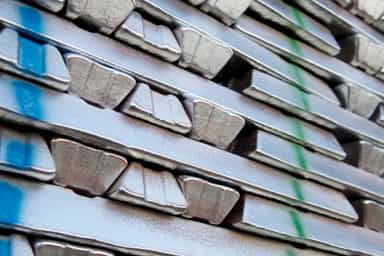
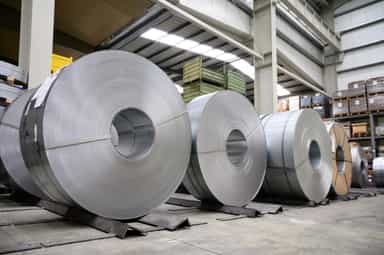
This Morning Base metals are firmer in early Thursday trade versus Wednesday's official LME close. Copper leads gains at 13,279.5, up 0.2% from Wednesday's 13,249.24, while aluminium adds 0.4% to 3,079 and lead climbs 0.8% to 1,840 — the day's biggest riser. Nickel is marginally higher at 16,175 (+0.1%). The two laggards are zinc, down 0.6% to 3,477.5, and tin, off 0.4% to 51,000. The tone is one of stabilisation after Wednesday's session saw aluminium touch a four-month low and copper, lead and nickel probe multi-month troughs before paring losses on Fed Chair Warsh's dovish-leaning inflation remarks. Macro & Geopolitics Markets are in a holding pattern ahead of a US June payrolls report brought forward a day due to the July 4 holiday; economists expect roughly 110,000 jobs but forecasts span 25,000–200,000, keeping September rate-hike odds over 60%. Fed Chair Warsh said inflation risks have eased but reaffirmed the 2% target and rejected loose policy. In Europe, euro-zone inflation cooled more than expected to 2.8% in June, and Lagarde described risks as more balanced, trimming ECB tightening bets ahead of the July 23 decision. Oil hit fresh four-month lows as more tankers transit the Strait of Hormuz, though US–Iran talks in Doha made little headway. Washington also declined to extend the USMCA, starting a decade-long unwind. Base Metals Wednesday's slide was driven by fund liquidation of bullish positions amid worries over higher US rates, a firm dollar and Iran uncertainty, before Warsh's comments helped metals pare losses. Copper found some support after the White House let a June 30 deadline on potential refined-copper tariffs pass without action — a lingering uncertainty for the market. Chinese manufacturing expanding for a seventh straight month underpinned sentiment. On the supply side, BHP filed to reopen Chile's $1.5 billion Cerro Colorado copper mine, while Antofagasta reportedly agreed spot-indexed concentrate deals with a guaranteed floor, a break from fixed TC/RC benchmarks. For aluminium, Norsk Hydro's Slovalco JV will restart 75,000 tpy in Q4, and Magnitude 7 plans a partial Missouri smelter restart — modest supply additions for a tight European market. Precious Metals Gold extended gains, rising around 0.7–0.8% to near $4,058/oz in Asian trade, building on Wednesday's 2%-plus rally. The move followed softer-than-expected ADP private payrolls (98,000 versus 118,000 forecast) and Warsh's inflation comments, which pushed yields lower. Traders now see roughly a 64% chance of a September hike, with today's nonfarm payrolls the pivotal cue. Silver outperformed, adding over 1.5% to above $60/oz, while platinum jumped around 2% to $1,607 and palladium gained toward $1,227, both recovering from multi-month lows hit earlier in the week. Steel The EU's new steel trade regime took effect on 1 July, replacing the safeguard that expired 30 June. Tariff-free import quotas are cut roughly 47% to 18.3 million tonnes a year, the out-of-quota duty doubles to 50%, and a "melt and pour" origin rule tightens traceability. Eurofer welcomed the protection, but downstream distributors warn of higher procurement costs and reduced availability. The UK introduced a parallel regime the same day with a 51% quota cut and 50% out-of-quota tariff. The changes should support EU domestic prices and, over time, favour scrap-intensive EAF producers — a structural tailwind for ferrous scrap demand within the bloc. Chinese rebar futures, by contrast, slid to four-month lows on weak property demand. Rare Earth Metals China's Rare Earth Industry Association pegged its price index at 266.0 on 1 July, with pressure concentrated in magnet and heavy inputs — NdPr, dysprosium, terbium and samarium — rather than broad-based. Western buyers continue to face scarcity and restricted access to heavy rare earths at almost any price, keeping availability the dominant concern for European magnet and defence supply chains. Neodymium held around 992,500 CNY/t, up roughly 5% on the month. The structural supply deficit is expected to persist into a second year, with China's H2 mining quota announcement and Q2 EV output data the key near-term catalysts. Forex The euro is steady near $1.138 in Asian hours after slipping about 0.4% Wednesday when Lagarde flagged more balanced risks, capping ECB hike bets. The single currency closed June down over 2% on the month and around 1.3% on the quarter, near one-year lows, as a firm dollar — underpinned by rising Treasury yields and September Fed-hike pricing — dominates. A dollar-priced metals complex remains sensitive to today's US payrolls: a strong print would firm the greenback and pressure euro-denominated buyers, while a weak number could offer relief. The yen languishes near a 40-year low around 162.5, with Tokyo signalling a less telegraphed intervention approach. Watch Today US June nonfarm payrolls (13:30 CET) is the session's key event, released a day early ahead of the July 4 holiday — a blowout print could revive September Fed-hike bets and pressure metals and the euro. Also due: euro-zone May unemployment (forecast 6.3%) and US factory orders. San Francisco Fed President Mary Daly speaks in Spain. Metal Radar - 02.07.26
Deel