So much news, so little time
door

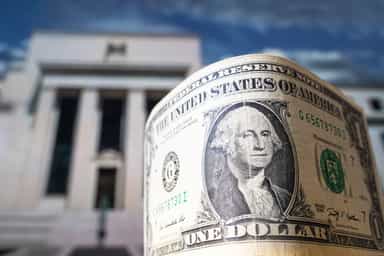
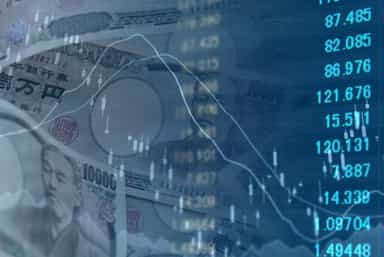
This week promised to be one of the year’s most eventful thus far – and it lived up to the billing. Jerome Powell oversaw his final Federal Reserve meeting as chair, capping an eight-year tenure that included a pandemic, regional bank crisis, multiple wars and an unprecedented public assault on the institution’s independence by the White House. While the central bank kept interest rates on hold at 3.50% to 3.75% on Wednesday, the bigger news was Powell’s announcement that he would stay on as a Fed governor until "things have calmed down". Powell stated, however, that he did not intend to act as a disruptive "high-profile dissident" under his designated successor, Kevin Warsh, whose nomination to lead the Fed cleared the Senate Banking Committee on Wednesday. The other major news out of the Fed meeting was the 8-4 voting split – the most dissents since 1992. Three regional bank presidents said they "did not support inclusion of an easing bias in the statement at this time." And Stephen Miran also once again dissented in favor of a rate cut. This lack of unanimity could make communication much harder moving forward, potentially generating more market volatility in the months ahead. The Fed was not the only central bank to face growing division this week. On Tuesday, the Bank of Japan kept its key policy rate on hold at 0.75% in a 6-3 vote, with three officials calling for a hike. That’s the biggest split on the board since 2016. The BOJ arguably faces the most challenging position of all major central banks due to the triple whammy it faces: spiking energy prices, rising bond yields and a slumping currency. Japan’s Ministry of Finance intervened to prop up the yen on Thursday, according to Reuters sources, sending the currency up as much as 3%. The yen then jumped again on Friday as Japan's top foreign exchange diplomat warned Tokyo was ready to step back into markets. Meanwhile, the stalemate between the U.S. and Iran showed no sign of easing this week, with neither side returning to the negotiating table and President Trump reportedly being briefed on further potential military action. Trump also met on Tuesday with top officials from U.S. energy majors, including Chevron, according to Axios, to talk about possible steps to calm oil markets in the event the U.S. blockade of Iranian ports continues for months. On the back of all this, Brent crude edged up during the week before briefly spiking to a four-year high above $126 a barrel on Thursday, which reflected both the negative news and technical factors. Staying with the oil markets, Reuters reported that OPEC+ is expected to agree to boost oil output targets by around 188,000 barrels per day at its meeting on Sunday. That’s largely theoretical, though, considering that most crude currently cannot leave the Gulf. What’s more, the meeting will be overshadowed by the absence of one of its most important members. The United Arab Emirates announced on Tuesday that it would leave OPEC on May 1 – one more sign of the growing rift between the UAE and OPEC’s de facto leader, Saudi Arabia. The UAE will now be in a position to ramp up production once the war ends and the Strait of Hormuz finally reopens. The exit is bad news for OPEC, of course, as it will sharply diminish the producer group’s influence over the oil market and potentially risk an all-out price war after the Iran conflict concludes. During this crisis, OPEC has already seen itself supplanted as the world’s “swing producer” by the U.S., which has solidified its place as the world’s dominant energy superpower. On the corporate side, European energy majors BP, Shell and TotalEnergies all reported first-quarter earnings this week, posting major gains from their trading operations. While they can’t compete with U.S. giants on production, they can still generate trading windfalls when volatility is sufficient, highlighting a growing transatlantic rift in the energy industry between traders and drillers. The tumult in energy markets – and dwindling hopes of a permanent ceasefire in the Middle East – had only a modest impact on equities throughout the week. The S&P 500 and Nasdaq rose on Thursday, closing April with their biggest monthly gains since 2020. How come? One explanation is that the current environment – characterized by rising geopolitical tensions, a tech arms race and higher government spending – may be positive for equities. Another answer is that $100-per-barrel oil simply doesn’t mean what it used to. The artificial intelligence arms race is obviously one of the key themes boosting equities – and there was mostly positive news on that front this week with a parade of mega-cap earnings. Alphabet on Wednesday beat quarterly revenue estimates on its best-ever quarter of cloud growth. Amazon also outperformed cloud revenue forecasts, sending its shares up. And Apple rose in extended trading on Thursday with a strong sales forecast. Meta, on the other hand, disappointed as it increased its annual capex forecast without proving to investors that this outlay on AI infrastructure would produce a sufficient return – sending its share price down more than 6% in extended trading. Microsoft also failed to impress, reporting a modest increase in cloud revenue growth compared to Alphabet. Next week is less jam-packed with market-moving events and thus may be a bit less eventful – but it’s 2026, so don’t count on it. For more data-driven insights on markets and commodities, check out Reuters Open Interest. You can learn: * What is Jerome Powell’s greatest legacy as Fed Chair? * Why might Asia ultimately turn out to be the winner from the Iran conflict? * Is the closing gap between U.S. and euro zone interest rates actually a mirage? * Why is the Iran war likely to be a lightbulb moment for Southeast Asia? * How is China’s clean energy industry benefiting from the Iran conflict? * What major weather event could soon place further strain on major power sectors? I’d love to hear from you, so please reach out to me at . This weekend, we're reading... MIKE DOLAN, ROI Finance & Markets Columnist: A new analysis from the Bruegel think tank looks at how financial markets cope with political risk, concluding that it is difficult but not impossible for portfolio managers to navigate. RON BOUSSO, ROI Energy Columnist: The World Bank published a special report on the effects of geopolitical oil supply shocks, breaking down the impact of supply losses on oil prices and the broader economy. ANDY HOME, ROI Metals Columnist: This just-released OECD report looks at the steady accumulation of trade restrictions in the critical minerals sector. Export controls have risen five-fold since 2009 and continue to climb. China's rare earth export controls have grabbed the headlines, but this is a global trend. GAVIN MAGUIRE, ROI Global Energy Transition Columnist: This OurEnergyPolicy report examines the mounting "stranded asset" risks facing power plant developers as climate mitigation threatens to strand much of the new capacity they are building. CLYDE RUSSELL, ROI Asia Commodities and Energy Columnist: This deep dive from the Oxford Institute for Energy Studies unpacks the Strait of Hormuz closure. It’s dense with detail but backed by strong analysis. We're listening to... ANNA SZYMANSKI, ROI Editor-in-Charge: This University of Chicago podcast featuring Nobel Prize-winning economist Douglas Diamond outlines the Federal Reserve's role in the financial system - and why it matters now more than ever. And we're watching... CLYDE RUSSELL, ROI Asia Commodities and Energy Columnist: Eurasia Group President Ian Bremmer unpacks the wider implications of the UAE's withdrawal from OPEC in this podcast. His central argument: this is a fight for the region's future.
Deel