Theme of the Day: What do Commodity Futures tell us about the Global Economy?
door

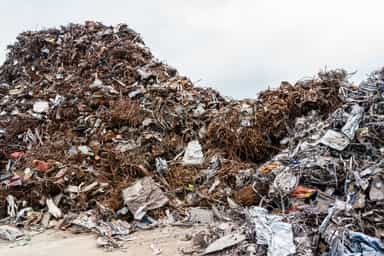
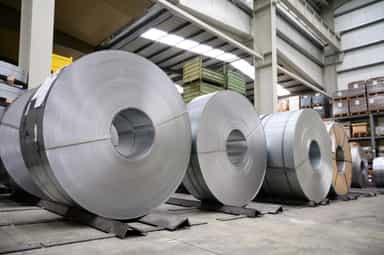
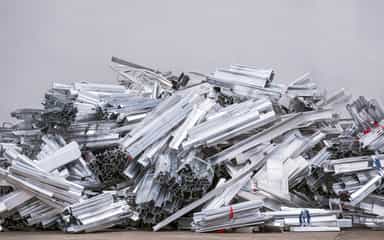
A research paper published in Commodity Insights Digest establishes that, among commodity futures markets, industrial metals stand out as uniquely informative about subsequent real economic activity. Specifically, returns in this sector forecast future industrial production growth and revisions in producers' expectations across a broad cross-section of countries. Moreover, the information embedded in industrial metals prices is also reflected in international equity markets. Overall, the evidence highlights the informational content of commodity futures markets, and positions industrial metals as a consistent leading indicator of global economic conditions. Commodities form the backbone of global economic activity, and futures markets often serve as their primary trading venue due to lower transaction costs and the lack of centralized spot markets. Consequently, commodity futures markets are well-positioned to aggregate dispersed information about global macroeconomic conditions. This information reflects traders' private knowledge of local demand and supply conditions, including real-time signals from supply chains, geopolitical developments, production disruptions, and agricultural conditions, increasingly complemented by satellite-based measures of inventories and yields. Yet it remains an open question whether energy, industrial metals, precious metals or agriculture commodity prices are in fact informative about global economic conditions. Also, for which countries does this information channel matter most? These questions are relevant for practitioners such as commodity traders and investors as well as macro analysts monitoring global markets. This is especially important to understand, considering the increased information frictions brought about by globalization and the financialization of commodity markets, whereby financial investors without direct exposure to commodity production or consumption have entered commodity markets on a large scale since the early twenty-first century. We collect daily prices and open interest for 26 highly liquid exchange-traded commodities from the Commodity Research Bureau and Datastream. We construct uncollateralized futures returns at the monthly frequency using a roll-over strategy between the first- and second-nearest-to-maturity contracts, excluding days with non-positive trading volume. To mitigate distortions from abnormal price and volume dynamics near expiration, we roll positions at the end of the month preceding the month prior to maturity. We group commodities into four sectors (energy, industrial metals, precious metals, and agriculture) and compute sector-level returns using equal weights, consistent with standard practice in the literature. We obtain monthly, seasonally adjusted real industrial production data from the World Bank and compute country-level growth rates over 3-, 6-, and 12-month horizons. We provide global evidence that, among the four major commodity sectors, only industrial metals act as a reliable barometer of future global economic activity. Industrial metals futures returns predict future real industrial production and revisions in producer expectations over the subsequent year. This barometer role is significant in a wide range of countries globally, both emerging and developed, and spanning all major world regions. These predictive effects are stronger in countries more exposed to the global economy, are driven by commodity demand shocks but not by supply shocks, remain robust to controlling for trade exposure, and do not weaken during periods of increased financialization. This distinctive role of industrial metals likely reflects their central use in procyclical industries, such as construction and machinery that support production activities globally, making their demand highly sensitive to global conditions. In contrast to industrial metals, energy prices primarily operate through the cost channel, with higher returns predicting weaker outcomes in energy importing economies. Agricultural commodities exhibit limited predictive power overall, with some positive effects in net exporting countries, while precious metals appear largely uninformative.
Deel