Theme of the Day: OECD Economic Outlook, Interim Report Mar 2026 - Testing Resilience
door
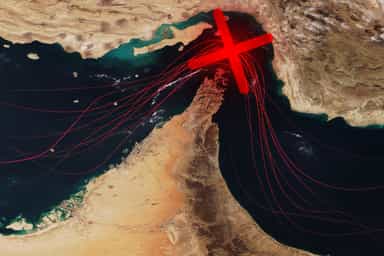
The conflict in the Middle East is testing the resilience of the global economy. The outlook is surrounded by high uncertainty and reflects the interaction of two opposing forces: On the upside, a surprisingly resilient business sector, an earlier-than-assumed resolution of the conflict in the Middle East that lowers energy prices, or broadening investment in artificial intelligence technologies that yields stronger productivity gains, could push growth higher. A significant downside risk to the outlook is that persistent disruptions to exports from the Middle East that raise energy prices even further than assumed and aggravate shortages of key commodities, add to inflation and reduce growth. Such a scenario, or lower than expected returns from AI investment, could also trigger more extensive repricing in financial markets, weakening demand and raising financial stability risks. The evolving conflict in the Middle East has human and economic costs for the countries directly involved and will test the resilience of the global economy. A halt in shipments through the Strait of Hormuz and the closure or damage of energy infrastructure has generated a surge in energy prices and disrupted the global supply of energy and other important commodities, such as fertilisers. Volatility in financial markets has picked up, particularly in some Asian economies, and financial conditions have tightened, though they remain mildly accommodative in both advanced and emerging-market economies. The breadth and duration of the conflict are very uncertain, but a prolonged period of higher energy prices will add markedly to business costs and raise consumer price inflation, with adverse consequences for growth. Prior to the escalation of the conflict, global growth remained resilient, with activity boosted by strong AI-related investment and production, and supportive financial and fiscal conditions. Global GDP growth is projected to ease to 2.9% in 2026 before edging up to 3.0% in 2027. The energy price surge and the unpredictable nature of the evolving conflict in the Middle East will raise costs and lower demand, offsetting the tailwinds from strong technology-related investment and production, lower effective tariff rates and the momentum carried over from 2025. These projections are conditional on a technical assumption that the current extent of energy market disruption moderates over time, with oil, gas and fertiliser prices declining gradually from mid-2026 onwards. Annual GDP growth in the US is projected to moderate from 2.0% in 2026 to 1.7% in 2027, as strong AI-related investment is gradually offset by a slowdown in real income growth and consumer spending. Euro area GDP growth is anticipated to ease to 0.8% in 2026, as higher energy prices weigh on activity, before increasing to 1.2% in 2027 helped by stronger defence spending. In China, growth is projected to ease to 4.4% in 2026 and 4.3% in 2027. G20 inflation is projected to be 1.2 percentage point higher than previously expected in 2026 at 4.0%, before easing to 2.7% in 2027 with an assumed fading of energy price pressures. Core inflation in the G20 advanced economies is anticipated to weaken from 2.6% in 2026 to 2.3% in 2027.
Deel